In the kitchen, cast-iron frying pans are highly favored for their excellent heat conductivity and durability. However, many users often encounter rust issues with the skillet pan. So, why do cast-iron skillets rust? Which types of skillets are prone to rust? And how should a rusted cast-iron pan be maintained? Raylon will address these questions one by one in this blog post.
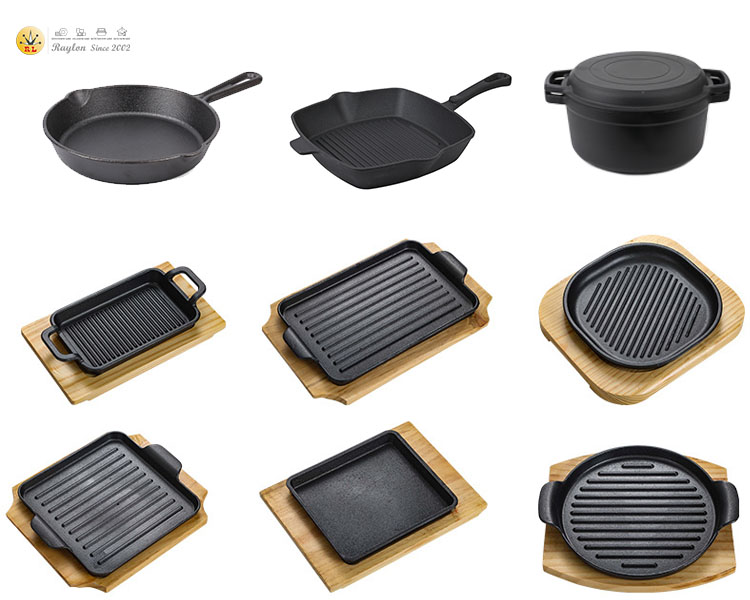
Cast-iron frying pans are a type of kitchen cookware made from cast iron, typically used for frying, stir-frying, grilling, and other cooking methods. Its heavy construction evenly distributes heat, preventing hot spots and resulting in more flavorful food. Cast iron skillets are not only suitable for home kitchens but are also widely used in commercial kitchens, making them the preferred choice for professional chefs and cooking enthusiasts.
Frying pans are primarily categorized into two types based on material: bare cast iron and enameled cast iron.
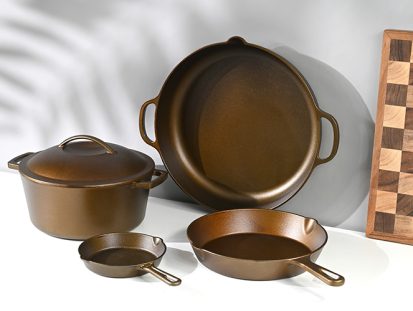
1. Bare Cast Iron: Uncoated cast iron skillets offer exceptional heat conductivity and high-temperature resistance, but require regular maintenance to prevent rust.
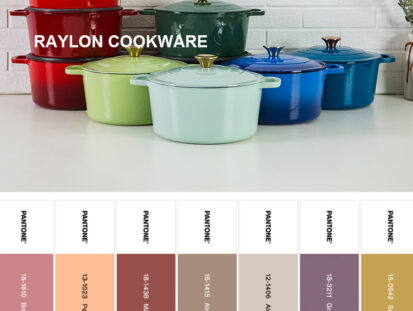
2. Enameled Cast Iron pans: Features an enamel coating applied over the cast iron surface. This not only enhances aesthetics but also effectively prevents rust and facilitates easy cleaning. However, its heat conductivity is slightly inferior to bare cast iron.
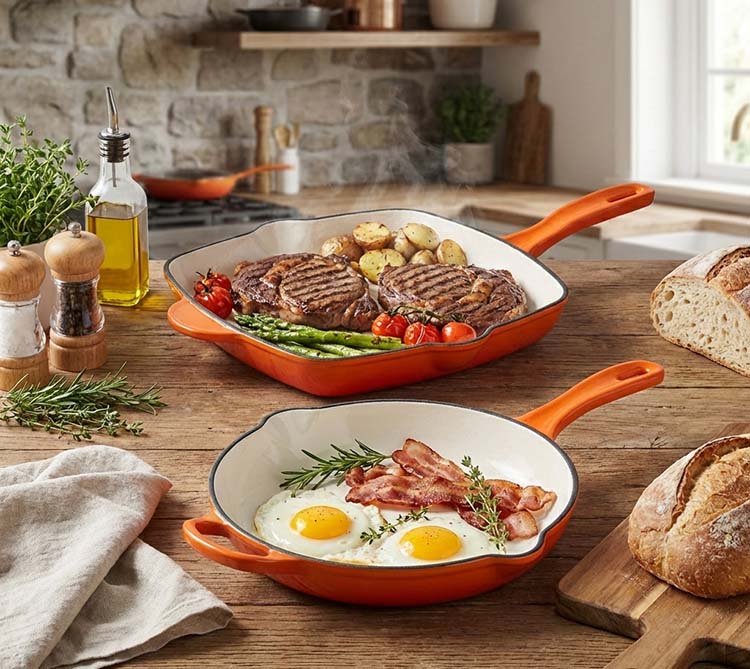
These material classifications cater to different user preferences regarding cooking experience and maintenance convenience.
The material properties of cast iron cookware directly influence its heat conductivity and durability. Pots meticulously cast from premium pig iron not only possess substantial weight but also deliver exceptional heat distribution. This ensures food cooks more evenly throughout the process, significantly enhancing culinary outcomes and the overall dining experience. Raylon Enterprise Co., Ltd. specializes in the research, development, and production of high-quality casting materials. We are dedicated to crafting cast iron cookware with an outstanding material foundation, precisely meeting the diverse needs of all users.
The primary cause of rust on cast-iron frying pans stems from the chemical reaction between iron in the material and oxygen and moisture in the air, forming iron oxide—commonly known as rust. Below are common factors contributing to rust formation:
If your cast iron skillet has rusted, don't rush to discard it. Follow these steps to restore its original shine:
Timely Cleaning: After each use, promptly wash with warm water and a soft sponge to prevent food residue buildup.
1. Thorough Drying: After washing, dry with a towel or place on the stove to heat-dry, ensuring no moisture remains.
2. Regular Oiling: Depending on usage frequency, periodically apply a thin layer of cooking oil to form a protective film and prevent rust.
3. Avoid Impact: Cast iron skillets are heavy and durable, but avoid harsh collisions during use to prevent damage.
As a wholesale seller of cast iron skillets, deep understanding of their characteristics, classifications, repair methods, and maintenance techniques not only enhances product competitiveness but also enables more professional after-sales service, boosting customer satisfaction and loyalty. Raylon offers high-quality cast iron frying pans. Please contact us if you need to purchase frying pans in bulk!